Tips & Technique
Master the fundamentals first. These are the things every beginner should know.
Most important
Watch the ball — not your opponent
Keep your eyes on the ball all the way onto your strings. This single habit will improve every shot you hit. Most beginners look up too early and mis-hit as a result.
Footwork
Move your feet before you swing
Get into position early so you have time to set up your shot. Small quick steps (the "split step") let you react in any direction. Never reach for the ball — move to it.
Grip
Hold the racket like a handshake
For a beginner, the Eastern forehand grip is ideal: shake hands with the racket. Don't grip too tight — a tension level of about 4/10 gives you feel and prevents injury.
Forehand
Finish your swing high
After contact, follow through and finish with the racket near your shoulder. A proper follow-through gives the ball topspin and keeps it inside the court.
Backhand
Two hands = more control
The two-handed backhand is easier to learn. Place your non-dominant hand above your dominant one. Think of it as a left-handed forehand.
Serving
Toss the ball consistently
Hold the ball in your fingertips and release at the top — don't spin it. Practice the toss alone before adding the swing.
Strategy
Aim for the middle of the court
Beginners lose most points by hitting out or into the net. Aim for the center with high margin — consistency always beats ambition.
Mindset
Stay relaxed between points
Tension is the enemy of good shots. Shake out your arm, breathe out on contact, and focus only on the next ball.
Positioning
Return to center after each shot
After hitting, always move back toward the center baseline. This reduces the angle your opponent can exploit.
Volleys
Don't swing at volleys — punch them
When at the net, keep the racket in front and use a short punching motion. Big swings cause wild errors.
Physical
Warm up and cool down every time
Tennis involves explosive lateral movement. Spend 5 minutes jogging and doing dynamic stretches before playing, and stretch again after.
Learning
Take at least a few lessons
Bad habits formed early are hard to unlearn. Even 3–5 lessons with a coach will set you on the right track.
The Rules
Tennis has simple basic rules. Once you know these, you can play a match straight away.
01
The court
A tennis court is 23.77m long and 8.23m wide (singles) or 10.97m wide (doubles). The net is 91cm high in the middle. The baseline is the back line, the service line is 6.40m from the net.
02
The serve
Each point starts with a serve. You stand behind the baseline and hit the ball diagonally into the opponent's service box. You get two chances: miss both and you lose the point (double fault).
03
In and out
A ball is "in" if it touches or lands on the line. It is "out" if it lands outside. If the ball hits the net during a rally and lands in the court, play continues. If it hits the net on a serve, it's a "let" and you serve again.
04
Winning and losing a point
You win a point when your opponent hits the ball into the net or out, the ball bounces twice, or the ball touches their body. You lose a point on a double fault or failing to return the ball.
05
Changing ends
Players change ends after every odd number of games and during a tiebreak after every 6 points. This ensures neither player always faces the sun or wind.
06
Doubles rules
In doubles you use the full wide court. The serve is the same as singles. Both players on a team alternate shots.
Scoring System
| Points | Name | Explanation |
|---|---|---|
| 0 | Love | Zero points. Starting score of a game. |
| 15 | Fifteen | First point won in a game. |
| 30 | Thirty | Second point won in a game. |
| 40 | Forty | Third point won. One more point wins the game. |
| 40-40 | Deuce | Tied score. Player must win two points in a row to win the game. |
| Adv. | Advantage | Point after deuce. Win the next point and you win the game. Lose it and it's deuce again. |
| 6 | Set | First player with 6 games (at least 2 ahead) wins the set. At 6-6 a tiebreak is played. |
| Tiebreak | Tiebreak | Played at 6-6. First to 7 points (win by 2) wins. |
| 2 or 3 sets | Match | Most matches are "best of 3": the first to win 2 sets wins the match. |
Practice Drills
You can do most of these alone or with a partner. Click any drill to see how.
01
Wall Rally
▼
Hit against a wall at a comfortable distance. The best solo drill for beginners — lots of repetitions and instant feedback.
- Stand 3–4 meters from a smooth wall.
- Drop the ball and hit it gently against the wall.
- Let it bounce once, then hit again. Count your record.
- Progress: hit without letting it bounce (volley wall).
02
Bounce & Catch
▼
Bounce the ball on your racket strings while walking around. Builds feel for the racket face and ball control.
- Start bouncing on the forehand face.
- Aim for 20+ bounces in a row.
- Alternate forehand and backhand face on each bounce.
03
Cross-Court Rally
▼
Rally cross-court with a partner. Cross-court is the safest direction — over the lowest part of the net with the most court to aim at.
- Both players at the baseline on the same diagonal.
- Keep the ball in play — focus on consistency, not power.
- Count rallies of 10+. Switch diagonal after 10 minutes.
04
Serve Toss Practice
▼
Practice just the ball toss without hitting. A consistent toss is the foundation of a reliable serve.
- Stand in your serving stance behind the baseline.
- Hold the ball in your fingertips and raise your arm straight up.
- Release at the top — catch it without moving your feet. Repeat 20 times.
05
Mini Tennis
▼
Play points using only the service boxes. This is how coaches worldwide introduce tennis to beginners.
- Both players stand inside the service box on their side.
- Soft controlled swings — focus on placement, not power.
- First to 11 points wins.
06
Footwork Patterns
▼
Practice the basic movement pattern without a ball — getting to the ball quickly and in balance.
- Ready position: feet shoulder-width, knees bent, weight on toes.
- Split step: small jump as your opponent hits.
- Side-shuffle 3 steps right, recover to center. 10 reps each side.
Video Lessons
Hand-picked tutorials from top coaches. Filter by topic and click to watch.

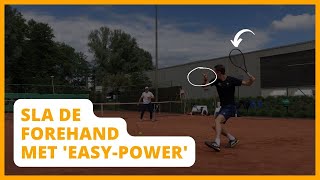
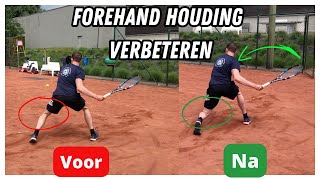
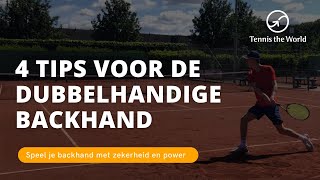

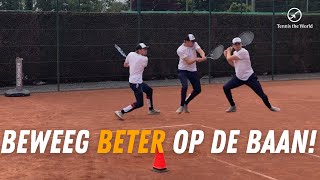
Top pick for beginners
Visit Channel ↗
Intuitive Tennis by coach Nikola Aracic — 32 years of experience, real beginner lessons.
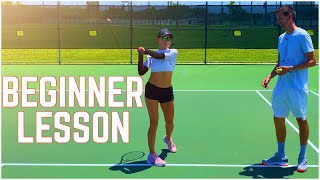
Intuitive Tennis
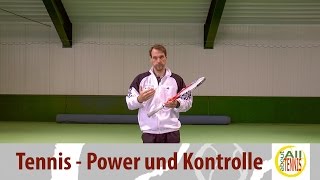
Beginner Tennis Lesson — Forehand, Backhand & Serve
A complete first lesson covering all three essential shots in one session.
Full Lesson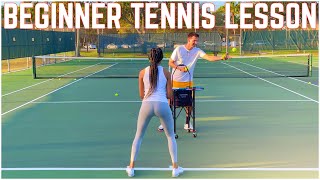
Intuitive Tennis
Forehand, Backhand & Serve Learned in 30 Minutes
Watch a real beginner learn the three core shots from scratch.
Full Lesson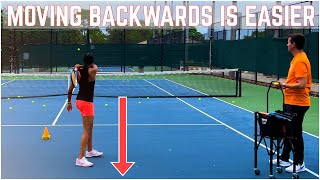
Intuitive Tennis
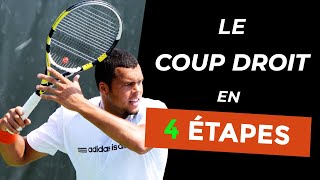
Beginner Forehand Footwork Tennis Lesson
How to move your feet before hitting a forehand — a key fundamental.
Footwork · Forehand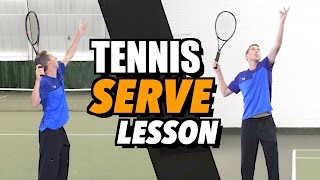
Essential Tennis
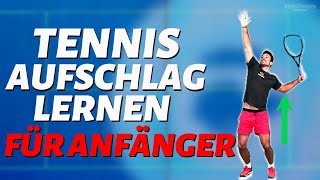
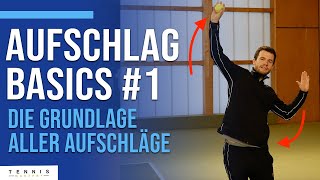
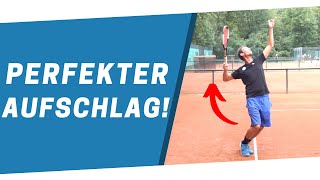
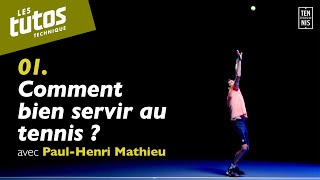
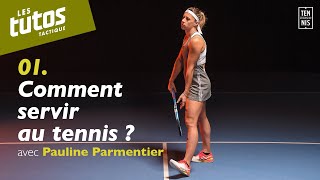
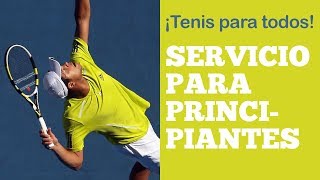
Tennis Serve Lesson for Beginners
Step-by-step serve lesson from grip and stance to the full swing.
Serve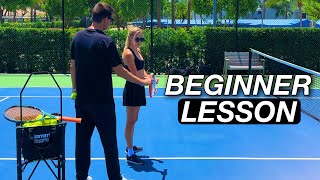
Intuitive Tennis
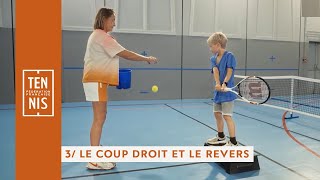
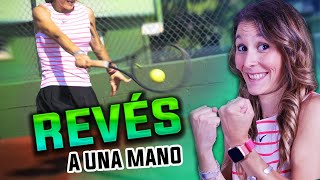
Beginner Forehand & Two-Handed Backhand Lesson
Clear breakdowns of the two most common groundstrokes for beginners.
Forehand · Backhand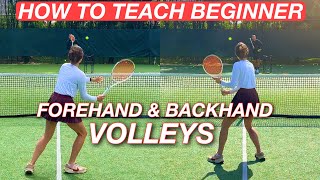
Intuitive Tennis
Beginner Forehand & Backhand Volley
The correct compact punch motion for volleys — shown with a real beginner.
Volley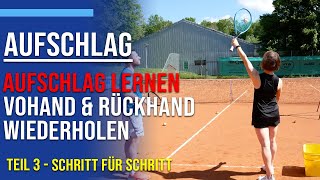





Glossary
Don't know what a term means? Look it up here.
Ace
A serve the receiver cannot touch. Counts as a point for the server.
Advantage
The point scored after deuce. Win the next point and you win the game.
Backhand
A stroke hit on the non-dominant side, using one or two hands.
Baseline
The line at the back of the court. Most rallies are played from here.
Break
Winning a game when your opponent is serving. Crucial for winning a set.
Cross-court
Hitting the ball diagonally. The safest and most common direction.
Deuce
Score of 40-40. A player must win two consecutive points to win the game.
Double fault
Missing both serves. Results in losing the point.
Down the line
Hitting the ball straight, parallel to the sideline — the more attacking option.
Drop shot
A soft short shot that drops just over the net.
Fault
A serve landing outside the service box or hitting the net.
Forehand
A stroke hit on the dominant side (right side for right-handers).
Groundstroke
Any shot hit after the ball has bounced — forehand or backhand.
Let
A serve that clips the net but lands in the service box. Replayed.
Lob
A high shot over the opponent's head, usually when they are at the net.
Love
Zero points. 'Love-all' means 0-0.
Match point
One point needed to win the entire match.
Net
The barrier dividing the court. 91cm high in the center.
Rally
A sequence of shots exchanged after the serve until a point is decided.
Serve
The shot that starts each point, hit from behind the baseline.
Service box
The rectangular area where the serve must land.
Set
First to 6 games (by 2) wins a set. Tiebreak at 6-6.
Slice
A shot with backspin that stays low after bouncing.
Smash
An overhead shot hit hard, usually in response to a lob.
Split step
A small hop just before your opponent hits. Keeps you light and ready.
Tiebreak
Played at 6-6. First to 7 points (win by 2) wins the set.
Topspin
Forward spin that causes the ball to dip quickly and bounce high.
Volley
A shot hit before the ball bounces, usually from near the net.
My Progress
Tick off skills as you feel comfortable with them. Progress is saved in your browser.
Skills unlocked
0/19
On the court basics
Learned the Eastern forehand grip
Shake hands with the racket.
Can hold the ready position
Feet shoulder-width, knees bent, weight on toes.
Practiced the split step
Small jump just before your opponent hits.
Focused on watching the ball all the way
Eyes on the ball onto your strings.
Groundstrokes
Hit 10 forehands in a row over the net
Focus on the follow-through finishing high.
Consistent forehand follow-through
Racket finishes near your opposite shoulder.
Can hit a two-handed backhand
Non-dominant hand pushes the shot through.
Rallied cross-court 10+ shots
Diagonal is the highest percentage direction.
Move feet before swinging
Getting into position early makes everything easier.
Serve
Practiced the toss 20 times consistently
Arm straight up, release at the top.
Got 5 serves in a row in the service box
Aim for the center — consistency first.
Have a reliable second serve
Slower with more spin — never miss your second.
Knowing the rules
Know how to keep score
Love=0. Points go: 15, 30, 40, game.
Understand sets and matches
First to 6 games (by 2) wins a set.
Know the difference between a fault and a let
Fault=serve out. Let=clips net but lands in, replay.
First milestones
Played your first full match
Even if you lost every point — you played!
Taken at least one lesson with a coach
Early coaching prevents bad habits.
Played mini tennis in the service boxes
Great for touch, feel and court sense.
Wall rally — 50 hits in a row
The best solo drill for beginners.