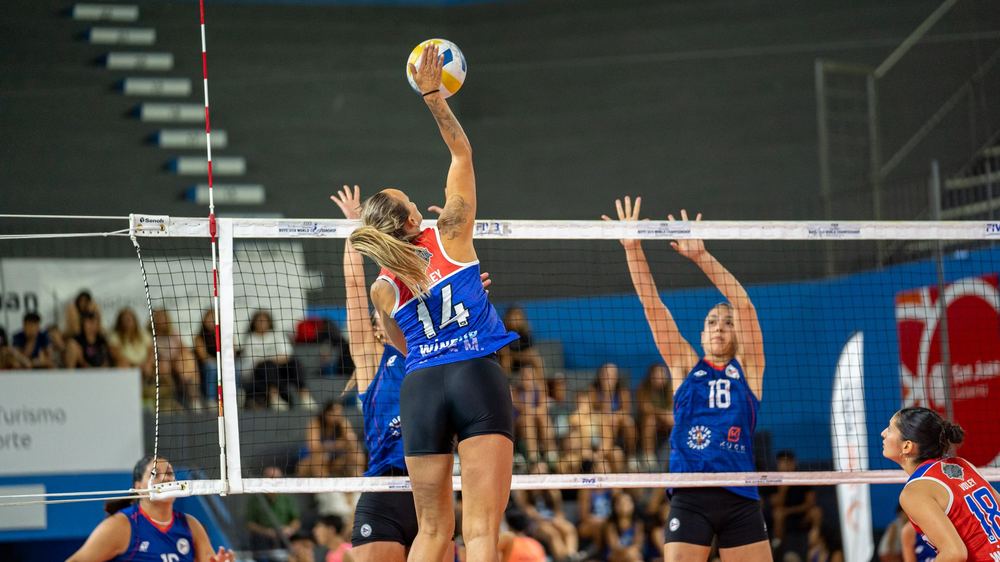
Most beginners think a good spike is about hitting as hard as possible. In reality it's about timing, placement and contacting the ball at the right point. A well-placed ball is often harder to defend than a hard one. The basics are in how to play volleyball.
Why power isn't the answer
A ball placed with the right technique scores more often than one simply hit hard. Aim at the space in the court, not at speed.
"I always hit as hard as I could — until I learned that a well-placed ball wins the point far more often."
The 3 most common mistakes
1 — You jump too early or too late. You then contact the ball at a bad point. Fix: practise your approach separate from the jump and count your steps out loud until the rhythm is automatic.
2 — You contact the ball with a bent arm. That gives little power and control. Fix: fully extend your arm at contact and hit the ball at its highest point, not after.
3 — You don't look at the court. You focus so hard on the ball that you miss the defence. Fix: glance at the court during your approach to find the space.
Drill
Have a setter feed you balls from different positions. Focus on a consistent approach and jump timing, a fully extended arm at contact, and deliberate placement rather than just hitting hard. More attack drills (with court diagrams) are in our drill library for coaches.
Reliable sources
The official rules are at the FIVB. Smart attacking starts with good teamwork — see the tactical tips.
Frequently asked questions
Do I need to learn to hit hard?
No, placement and timing first. A well-placed ball is often harder to defend than a hard one.
When should I jump?
Time your take-off to the set so you contact the ball at its highest point, in front of you.
Why does my spike go into the net?
Usually a bent arm or contacting too late. Fully extend your arm and hit the ball above you.
Where do I find attack drills?
The drill library has worked-out attack and middle-attack drills with diagrams.